
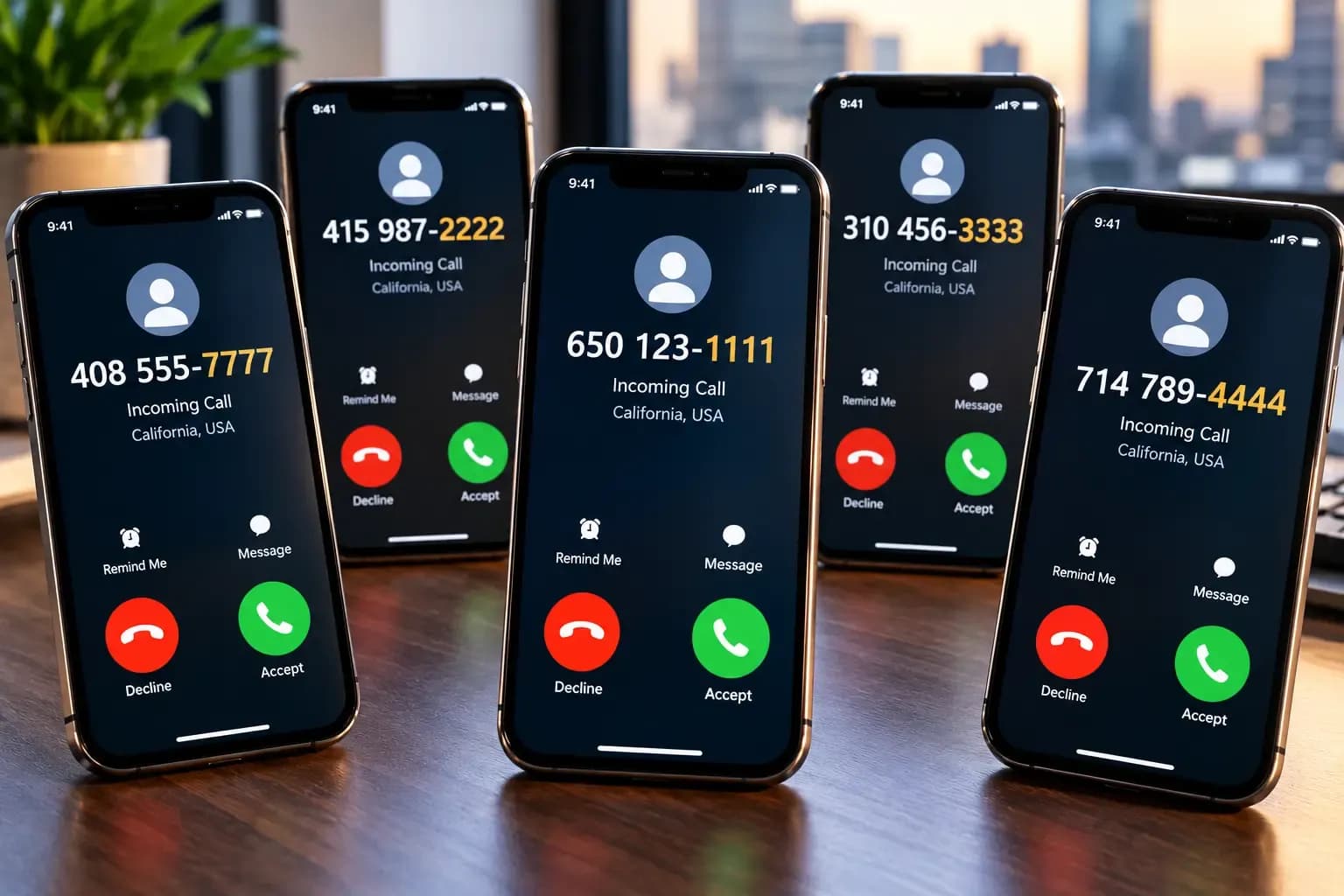
Vanity phone numbers are telephone numbers chosen because people can remember them. Either the keypad letters spell a word, like 1-800-FLOWERS, or the digits follow a pattern, like 555-5555. You get one by searching an inventory for an available number, buying it, and transferring it to your carrier or VoIP provider. Expect to pay from a few hundred dollars to about $2,000 for a premium local number, plus your carrier's normal monthly service fee.
This guide covers what a business gets from a memorable number, how to find and buy one, how the keypad system works, what the numbers cost, and how to choose one you will still like in ten years. You will also see how vanity cell numbers and toll-free options differ from local ones.
Numoreé is a marketplace for premium vanity numbers, founded in 2015 and formerly known as Golden Phone Numbers. It lists more than 50,000 numbers across 200+ area codes. The real listings and prices below come from that inventory, so you can see what a vanity number costs in practice.
Why vanity phone numbers are worth having for a business
A vanity number is worth having when customers must remember or dial your number without a link to click. It turns a contact detail into part of your brand, and it makes you easier to call and easier to recommend.
A number people can remember without writing it down
Most people forget a random ten-digit number within minutes. A number like 201-426-6666, or a word they already know, sticks in memory after one hearing. That removes the small friction between deciding to call and actually calling.
A memorable number also signals an established business. Repeated digits look deliberate, a local area code tells customers you are nearby, and a word number tells them what you do before they pick up. It is also easier to pass along. A customer can say "it's all fours at the end" to a neighbor far more easily than recite ten random digits.
A vanity number earns its price in the places where nobody can click: radio, trucks, signs and word of mouth.
Where the payoff is largest and where it is smaller
The payoff is biggest in media where the number has to be remembered or typed by hand. Here is where it works hardest:
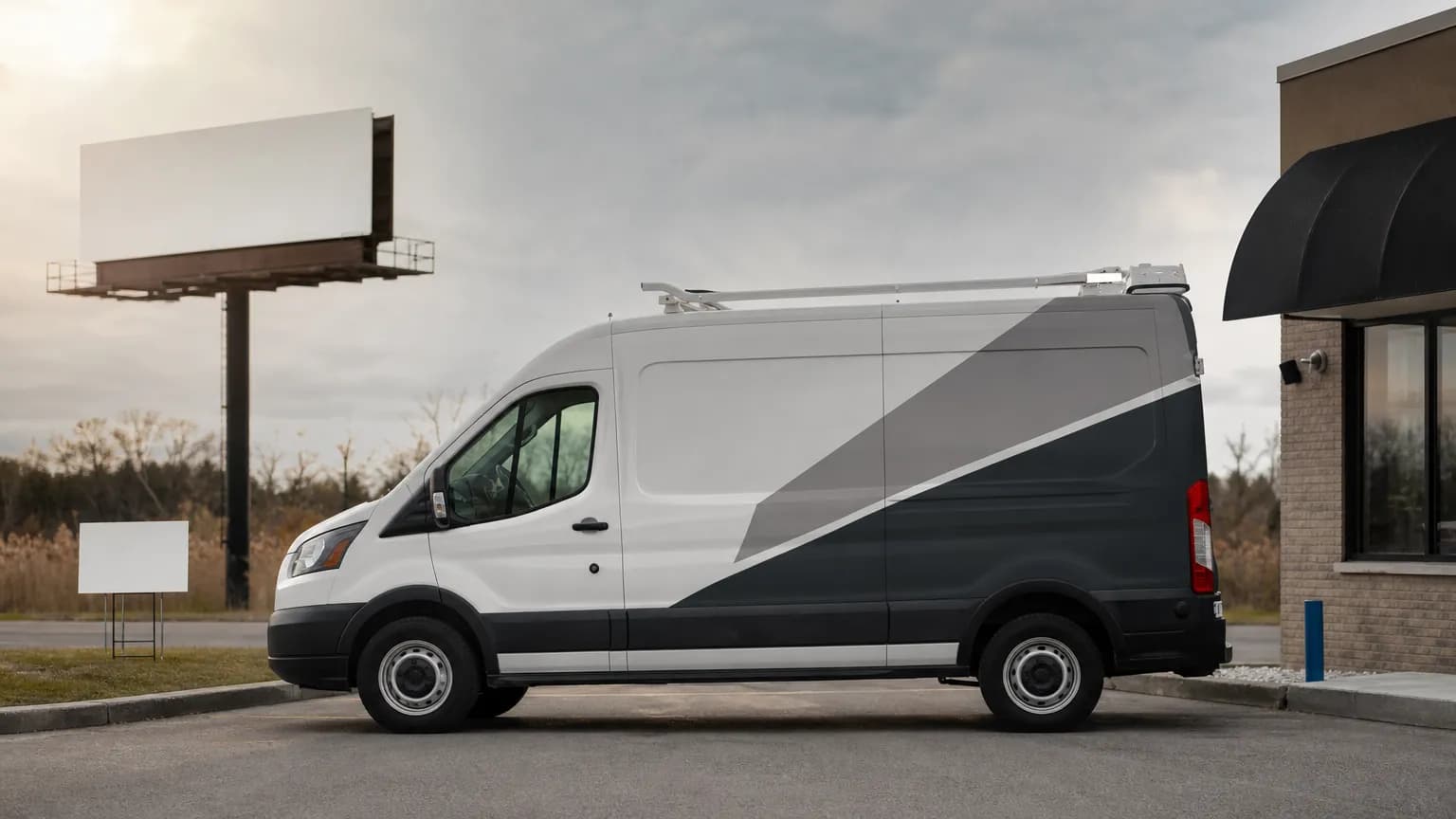
- Vehicle wraps, yard signs and storefront signage
- Radio, podcast and TV ads
- Billboards, mailers and printed flyers
- Business cards and voicemail greetings
- Referrals, where customers say your number out loud
The payoff is smaller if nearly all of your customers find you through a click-to-call button on Google or a web form. In that case a vanity number is a nice branding touch, not a revenue driver. You should decide honestly which group you belong to before you spend money.
One more use is tracking. Some businesses assign a different number to each ad channel, so they can see which one produces calls. That needs more than one number, so budget for it.
How to find and buy a vanity phone number
You find a vanity number by choosing local or toll-free, searching an inventory by area code, keyword or pattern, and buying the one you like. Then you transfer it to your carrier. Most of the elapsed time is spent waiting for the transfer, not shopping.
Search by area code, keyword or pattern
Start with the area code your customers expect, then choose between a word and a pattern. A search for vanity numbers works best when you narrow it by one of these routes:
- Area code or city: best for a local presence, such as 201 for northern New Jersey.
- State: useful when you serve a region and any of several area codes will do.
- Keyword: best for word numbers and toll-free numbers, such as a trade or brand name.
- Pattern: repeated digits such as 5555, 8888 or 0000.
On Numoreé you can search the entire US, filter by state, or browse by category. The default view shows numbers whose last four digits repeat, and a "Show all numbers" option removes that filter. If the number you want is not listed, the brokerage service locates and negotiates premium numbers that are not currently for sale on the site.
Buy the number and transfer it to your carrier
Buying is quick, and the transfer follows a fixed order. Each step builds on the one before:
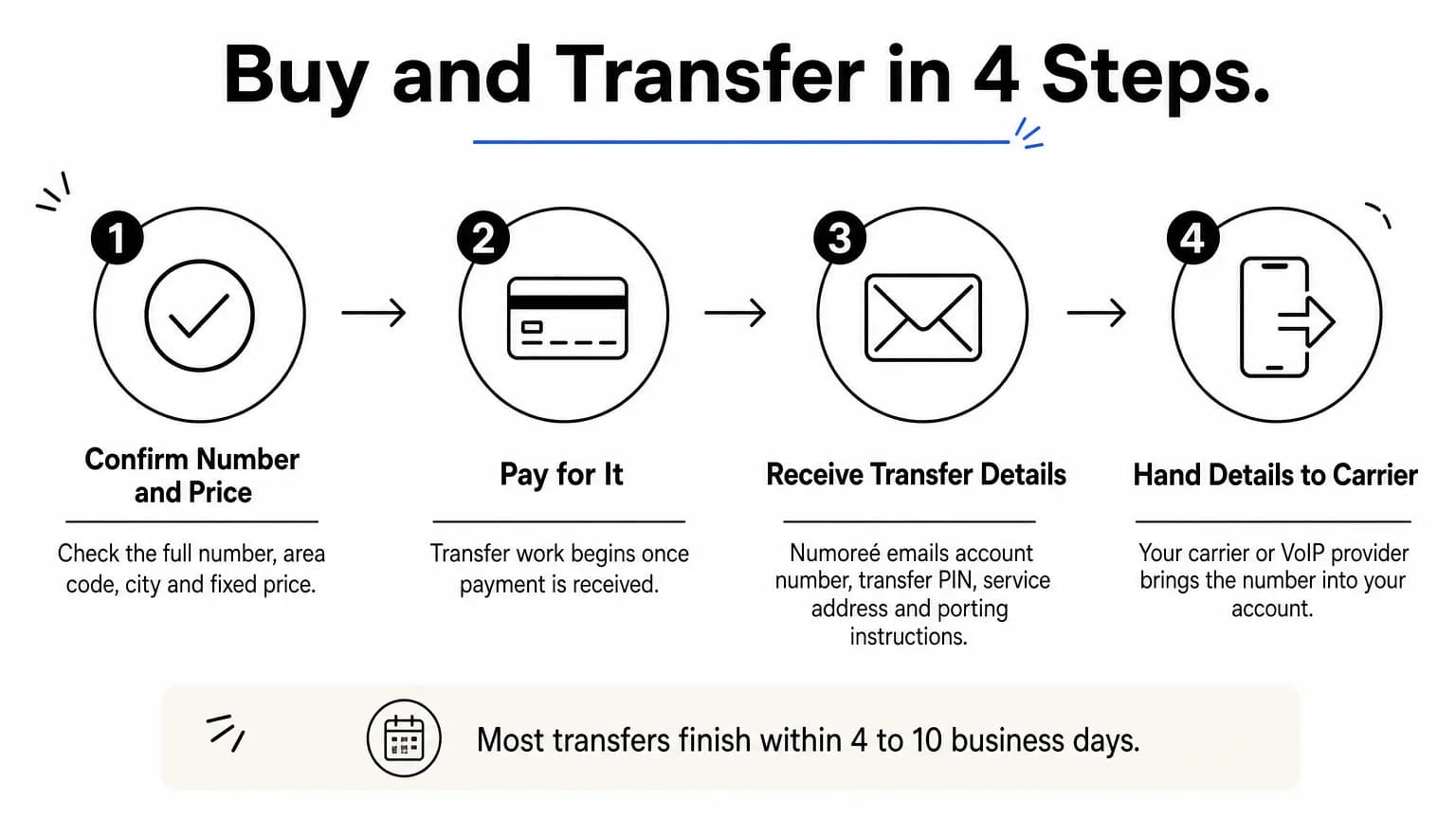
- Confirm the number and price. Listings show the full number, area code, city and a fixed price.
- Pay. Transfer work begins once payment is received.
- Receive your transfer details. Numoreé emails the account number, transfer PIN, service address and porting instructions.
- Hand the details to your carrier or VoIP provider. They bring the number into your account.
Most transfers finish within 4 to 10 business days, depending on the carrier and the number type. The purchase price is a one-time cost for the number itself. Your carrier may charge separate monthly service fees. Once the transfer completes, the number sits in your telecom account under your control, subject to carrier rules.
Do the checking before you pay, because refunds are generally not offered once a transfer has begun. Confirm the digits and area code, and ask your carrier whether it accepts a port of that number.
Check that your carrier will accept the number before you pay, because refunds generally stop once the transfer begins.
Types of vanity numbers and how the keypad works
Vanity numbers come in two forms, word numbers and pattern numbers. They also come in two kinds, local and toll-free. Any of them can ring your cell phone.
Word numbers and pattern numbers
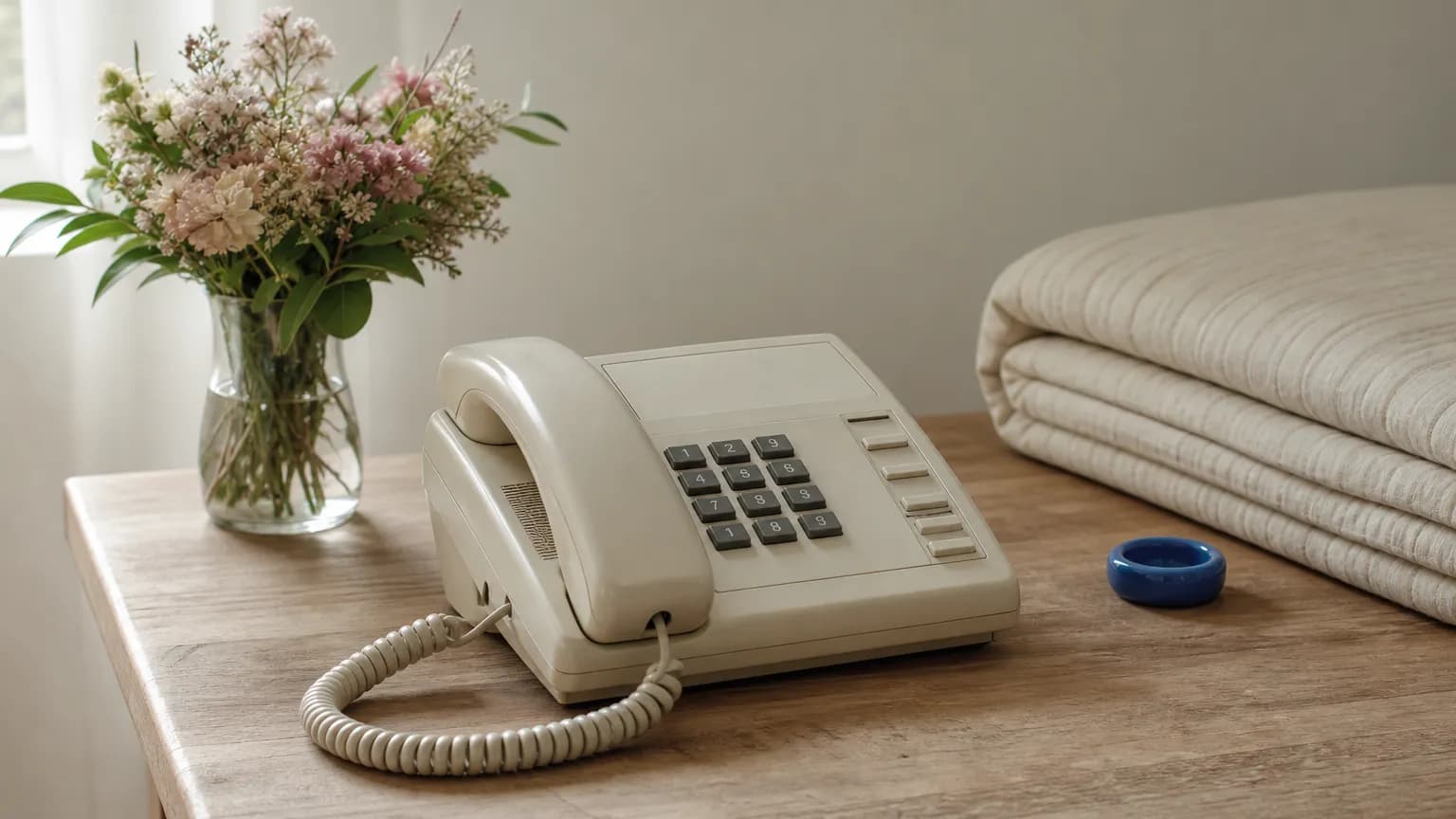
A word number uses the letters printed on a phone keypad. Each digit from 2 to 9 stands for three or four letters:
Digit | Letters
2 | A B C
3 | D E F
4 | G H I
5 | J K L
6 | M N O
7 | P Q R S
8 | T U V
9 | W X Y Z
Dial 1-800-FLOWERS and you are really dialing 1-800-356-9377. The phone network only sees digits, so the word exists only in your customers' memory. A ten-digit number leaves seven digits after the area code, so a seven-letter word fits exactly. A longer word such as 1-800-MATTRESS still works, because extra letters are ignored.
A pattern number skips the letters and uses digits that are easy to recall, like 201-267-2222 or 201-298-0000. These are often called easy-dial numbers. They suit businesses without a good word to spell, and many buyers also like patterns such as 8888 that are seen as lucky.
Local, toll-free and vanity cell numbers
A local vanity number carries a specific area code, which builds trust in one community. A toll-free vanity number starts with 800, 888, 877, 866, 855, 844 or 833. Callers do not pay, and the number reads as national. Toll-free numbers are managed through carriers and Responsible Organizations, so read your provider's terms.
| Local | Toll-free
Starts with | Your chosen area code | 800, 888, 877, 866, 855, 844, 833
Best for | Neighborhood and regional trade | National reach, word numbers
Example format | 201-267-2222 | 844-444-BARN
Vanity cell numbers and vanity mobile numbers are not a separate product. They are vanity numbers that ring a mobile phone. You can port the number to a mobile carrier that accepts it, or keep it with a VoIP provider and route calls to your cell through an app or call forwarding. Ask your carrier which option it supports before buying.
A vanity cell number is simply a vanity number that rings your cell phone, so the carrier's porting rules matter more than the label.
What vanity numbers cost and whether any are free
A premium local vanity number costs a one-time fee, from $249 to $1,995 for the listings below. Your carrier then charges its usual monthly service on top. Free vanity numbers exist in a limited form, and they rarely include the best patterns.
What you pay for the number itself
Price follows how memorable and how scarce a number is. Here are real Numoreé listings, all in area code 201:
Number | Location | Price
201-267-2222 | Oradell, NJ | $249
201-335-4444 | Rochelle Park, NJ | $349
201-426-6666 | Little Ferry, NJ | $449
201-298-0000 | Hasbrouck Heights, NJ | $995
201-201-4444 | Jersey City, NJ | $1,995
Repeated-digit numbers sit at the low end, and sequences such as 6666 and 0000 cost more than 2222. The $1,995 listing shows the top of the range, because the whole number is a pattern: 201 repeats and 4444 closes it. Prices are fixed on each listing, so you can compare them without negotiating.
Monthly fees, a worked example and free options
Add the monthly line cost to see your real total. Say you buy 201-426-6666 for $449 and your VoIP plan costs $20 a month. That is an assumption for illustration, and your carrier's price will differ. Year one costs $449 plus $240, or $689. Over three years you pay $449 plus $720, or $1,169. The number fee never repeats, and the monthly line fee would exist with any number.
On the free question, some providers let you choose from a pool of numbers at no extra charge when you sign up. Those pools tend to hold ordinary numbers, not 5555 endings or word numbers. Free vanity number generators and lookup tools help you brainstorm words and check what spells what, but they do not give you the number. To own a good one, you buy it or lease it.
Treat the purchase price as a one-time brand investment and the monthly fee as a normal phone bill.
How to pick a vanity number you will not regret
Pick a number that is easy to say, hard to misspell and matched to the area where your customers live. Test it out loud before you commit, because a number is only valuable if people can use it.
Test the number before you commit
Run each finalist through these checks:
- Say it over a bad connection. If you have to repeat it, simplify it.
- Check the spelling. Avoid words with variant spellings. "KLEEN" will lose callers who spell "CLEAN."
- Read the whole keypad. Make sure the full ten digits do not spell something unintended.
- Look up the number's history. Search it online and call it once. Previous owners may have used it for another business or for spam.
- Match it to your channels. Radio and vehicles reward short, rhythmic numbers.
A number that survives all five checks is probably safe to buy.
Match the number to your market and your future
Choose local if your customers are in one area and you want to look like part of the community. Choose toll-free if you serve people nationally or want a word number. Either way, look for a number that will still fit when you add services or locations.
Think in decades, not campaigns. The recognition you build lives in the number, and changing it later means starting over. This is why the best choice is rarely the cleverest one. It is the one customers will still repeat easily in ten years. If you are not sure which number fits, the brokerage team can help find a specific number you have in mind.
Choose the number you could happily say aloud for ten years, not the one that suits this quarter's ad.
Choosing your number
A vanity number is a phone number people remember, either as a word on the keypad or as a pattern of digits. It earns its cost where customers cannot click, and the cost is a one-time fee plus your carrier's usual monthly bill. The process is simple: search, check, buy, transfer. The hard part is choosing a number that is easy to say, hard to misspell and tied to the area your customers live in.
If you are ready to look at real inventory, browse local and toll-free vanity numbers on Numoreé. Search by area code, state or keyword, compare fixed prices, and buy the number that fits your brand.